
It may be one of the most important projects on which I have ever worked. For the past couple years, I have served as lead scholar for Hidden Voices: Muslim Americans in United States History, a curriculum written for the New York City Department of Education (DOE), which operates the largest single public school district in the country–over 900,000 students
The project, covered by the New York Times, is now available open-access to any student or teacher who wants to use it, wherever they live, for free. Very soon, the volume will also be printed and distributed to all New York City schools. We expect Volume Two to be finished in 2026.
Hidden Voices: Muslim Americans in United States History has been a highly collaborative project, bringing together researchers, educators, illustrators, and the staff at the NYC’s social studies department to produce a volume that contains original content that may surprise even the most knowledgeable experts in Muslim American studies. It may be the largest team of professionals ever assembled to construct a Muslim American studies curriculum.
Like other volumes in the Hidden Voices series, Volume One features profiles of historical figures and events and asks students to interpret their significance to U.S. history. Starting with the 1521 revolt in Santo Domingo and ending with the story of Katie Groverner Brown of Sapelo Island, Georgia, this volume includes essays on first two eras of U.S. Muslim history as well as pedagogical essays, illustrations, primary sources, classroom activities, a glossary, and maps. It offers social studies instructors resources to help their students think about the meaning and significance of Muslim Americans as part of the larger story of the United States.
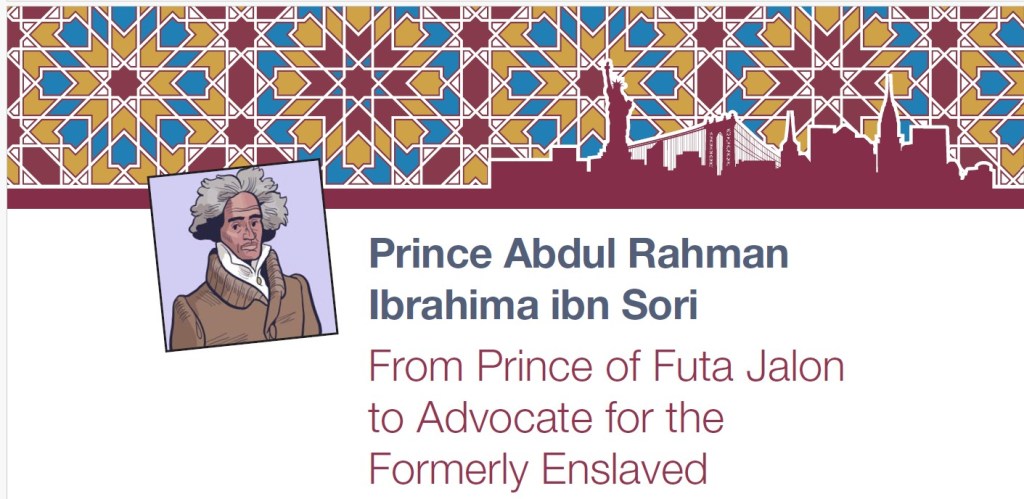
As lead scholar, my job included (1) helping to identify which Muslim events and persons to profile; (2) suggesting various scholars to compose the profiles; (3) recommending how to divide this 500-year story into various historical periods; (4) writing “portraits” of each era as well as an overview essay for the entire project; (5) identifying important historical sites for an illustrated map; (6) producing a pedagogical essay about how to handle religion in the public school classroom; (7) penning some of the profiles; and (8) reviewing each element of the curriculum.
The curriculum is not the first and will not be the last to integrate the Muslim American past into social studies classrooms. Nor should it be. But in my view this work is a uniquely excellent contribution to the body of Muslim American studies K-12 curricula. Its use in the nation’s largest school district has the potential for unprecedented impact on the nation’s understanding of its own past.

 Edward E. Curtis IV
You must be logged in to post a comment.