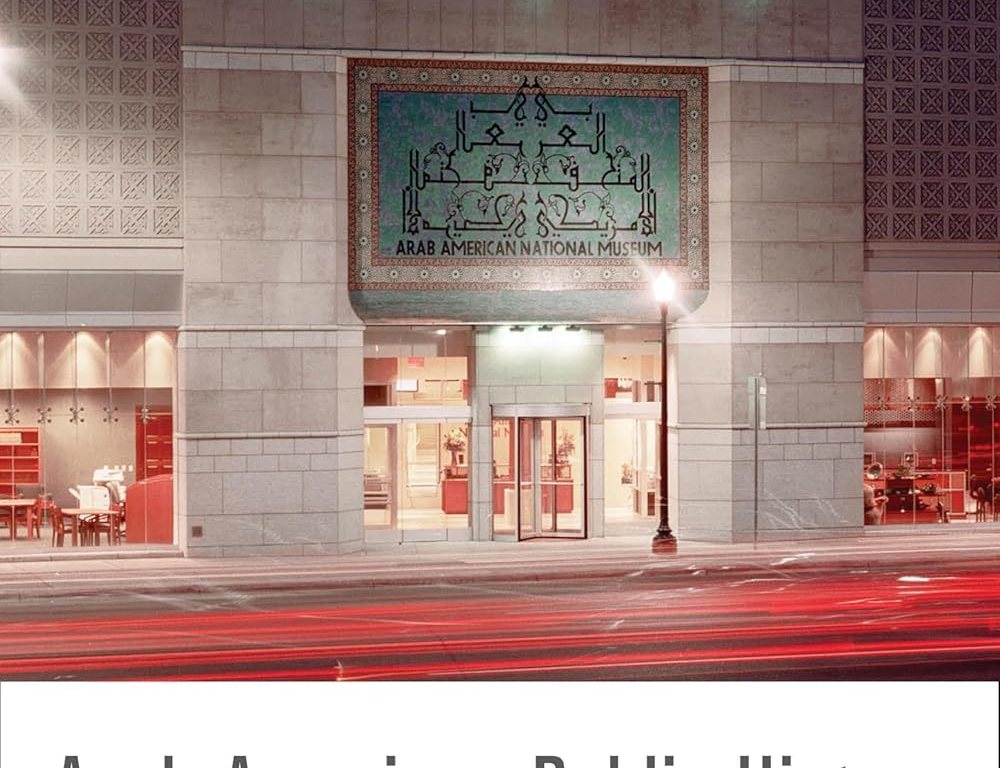
This is a history that stubbornly refuses to yield the space of memory to those who wish that we were never here.
My new edited book, Arab American Public History, is now available from Temple University Press, and like a number of my works, it has been published at a terrifying moment for the communities about which and for whom I write. The content of the book resists that terror and so I welcomed the book this week with a blog post in North Philly Notes outlining the importance of memory. If you would like to order a copy of the book from the press, please use discount code 25FNBK.
Deport This! Arab American Public History and the Powerful Resistance of Memory
Professors sometimes sit, stand, and yell on the front lines of great moral conflicts. It’s happening now. Again.
This week, one of my colleagues in Arab American studies wrote that several of her students in Minnesota had been maced and detained by ICE during the protests against the roundups of Black and brown U.S. citizens, visa holders, and foreign visitors throughout the state.
This colleague asked for help as she prepared to join a general strike, to feed and house those affected, to offer basic legal guidance to them, and to sue in federal court to stop ICE from its detentions of tens of thousands.
Anyone familiar with U.S. history knows that deportation of immigrants is a longstanding pattern of xenophobia, an endemic part of the American experience championed by a portion of the American people and legally enacted by branches of the federal government.
For those of us in Arab American studies, our awareness of its 9/11 manifestations in government-sponsored Islamophobia is revived every electoral cycle or when an act of political violence involving Muslims occurs. Since 9/11, foreign and U.S. Arabs and Muslims have been “banned,” lost their citizenship through proxy denaturalization, been the victims of counter-intelligence sting operations, harassed by Homeland Security at the border, rounded up as material witnesses, and even tortured at CIA black sites, Guantanamo Bay, and Abu Ghraib prison.

Many of us in the field of Arab American studies have organized as citizen activists in response to anti-Arab animus.
But as academics, we have also used our scholarship to expose, analyze, and understand not just the prejudice, discrimination, and violence faced by Arabs and Muslims in the United States and abroad but also the resilience of our community. We are more than victims, and some of us write and teach to highlight the strength, the joy, and the (gallows) humor of our community.
We celebrate our humanity in the same public spaces where we are being dehumanized. We claim our place in a nation that has always been home to speakers of Arabic—most of them were enslaved Muslims at first. My ancestors, including my great-great-grandparents and their children, arrived here in the late 1800s. Even as various governmental and popular voices insist that they are “taking their country back” from people like us, my family elders taught me how we have always been part of this country.
For the first time, a group of us have written a book, Arab American Public History, that examines our community’s work outside the traditional classroom in museums, television, film, local communities, libraries, and on the Internet, among other places, to inform ourselves and others about our accomplishments and our challenges.
History done with and for the community is not the same kind of resistance as direct action but, as we know from other minoritized communities in the country, people’s ideas about history shape their politics and their policies. The idea that Arab people and culture are new to the country informs a lot of anti-Arab prejudice.
Arab American Public History is not only an analysis but also an instruction manual for those who want to help us acknowledge the long presence and contributions of my community in the United States. Readers learn about community efforts among Arabs and non-Arabs to unearth the history of Little Syria in Boston, to enjoy the many Arab cuisines of Greater Detroit, to preserve precious archives in Houston, to make a documentary film about Arab Indianapolis, to create walking tours in La Crosse, Wisconsin, and to trace Arab American genealogies, among other topics.
This is history-making that everyone can participate in.
This is a history that stubbornly refuses to yield the space of memory to those who wish that we were never here. No matter what is done to our bodies, and we have come to fear the worst since 9/11, this is a history that, if others help us tell it, resists the terror of contemporary times. You can’t deport our memory.
 Edward E. Curtis IV
You must be logged in to post a comment.